
If you’ve noticed green film on the north side of your house, black streaks under the eavestroughs, or slick dark patches on a shaded walkway, you’re looking at organic growth: mold, mildew, algae or moss. With Ontario’s humid summers and wet springs and falls, it’s one of the most common things we clean.
What it is and where it grows
Mold, mildew and algae feed on dirt, pollen and moisture. They thrive in shady, damp spots that don’t get much sun or airflow: north-facing siding, the underside of decks and balconies, walkways under trees, and anywhere water drips or pools.
Why it matters for your health
Mold spreads by releasing tiny spores into the air. For many people that isn’t a problem, but for anyone with allergies or asthma it can trigger sneezing, coughing, itchy eyes or trouble breathing. Young children, seniors and people with weaker immune systems tend to be more sensitive.
Growth on the outside of your home doesn’t always stay outside. Spores near windows, doors and decks can blow in or get tracked in on shoes, so keeping your exterior clean helps keep the air inside fresher too.
Why it matters for your property
Organic growth holds moisture against the surfaces it covers. Over time that can break down paint and exterior coatings, stain siding and concrete, and speed up rot in wood decks and trim. Left long enough, a cleaning job can turn into a repair or replacement job.
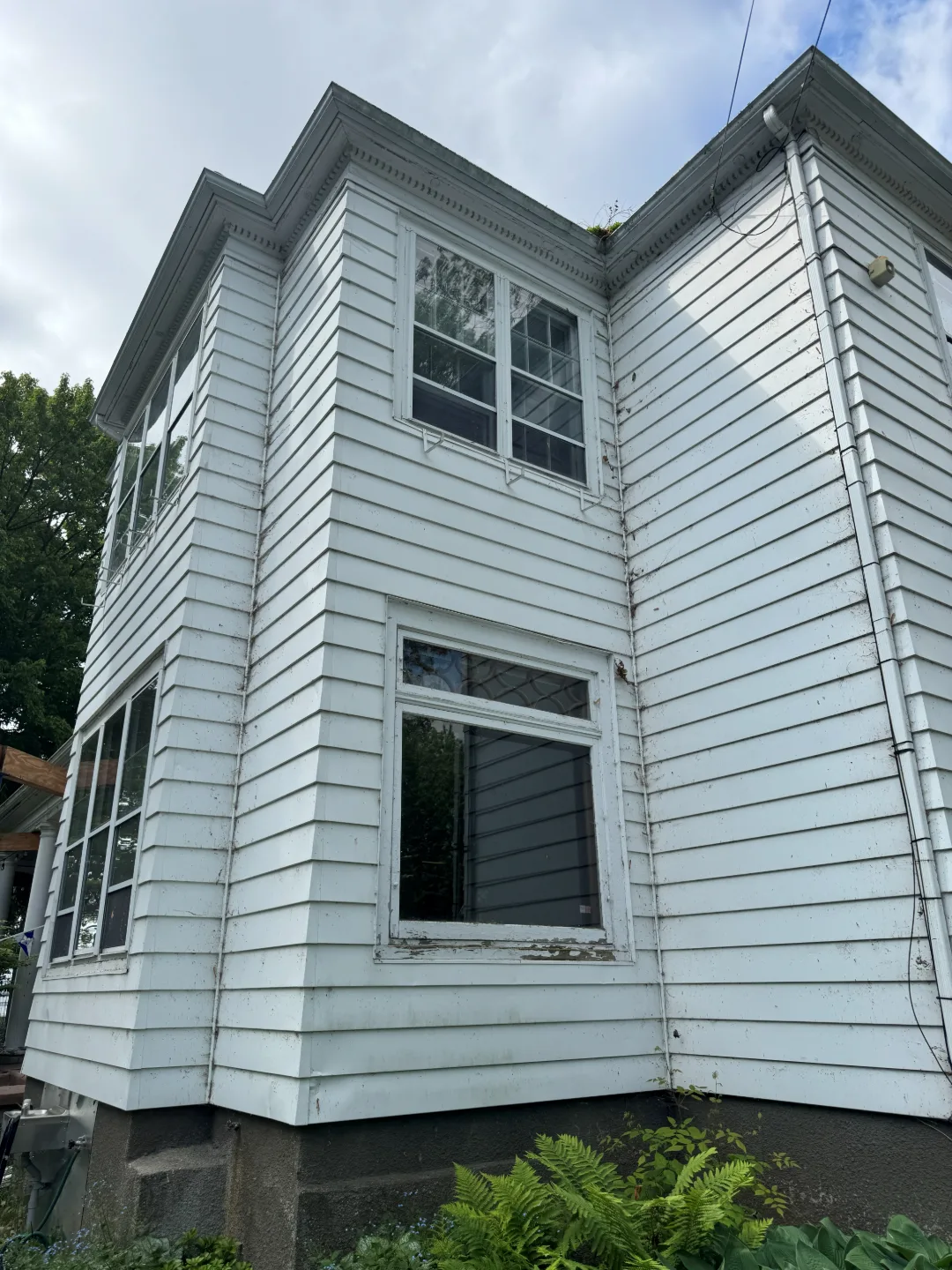 Before
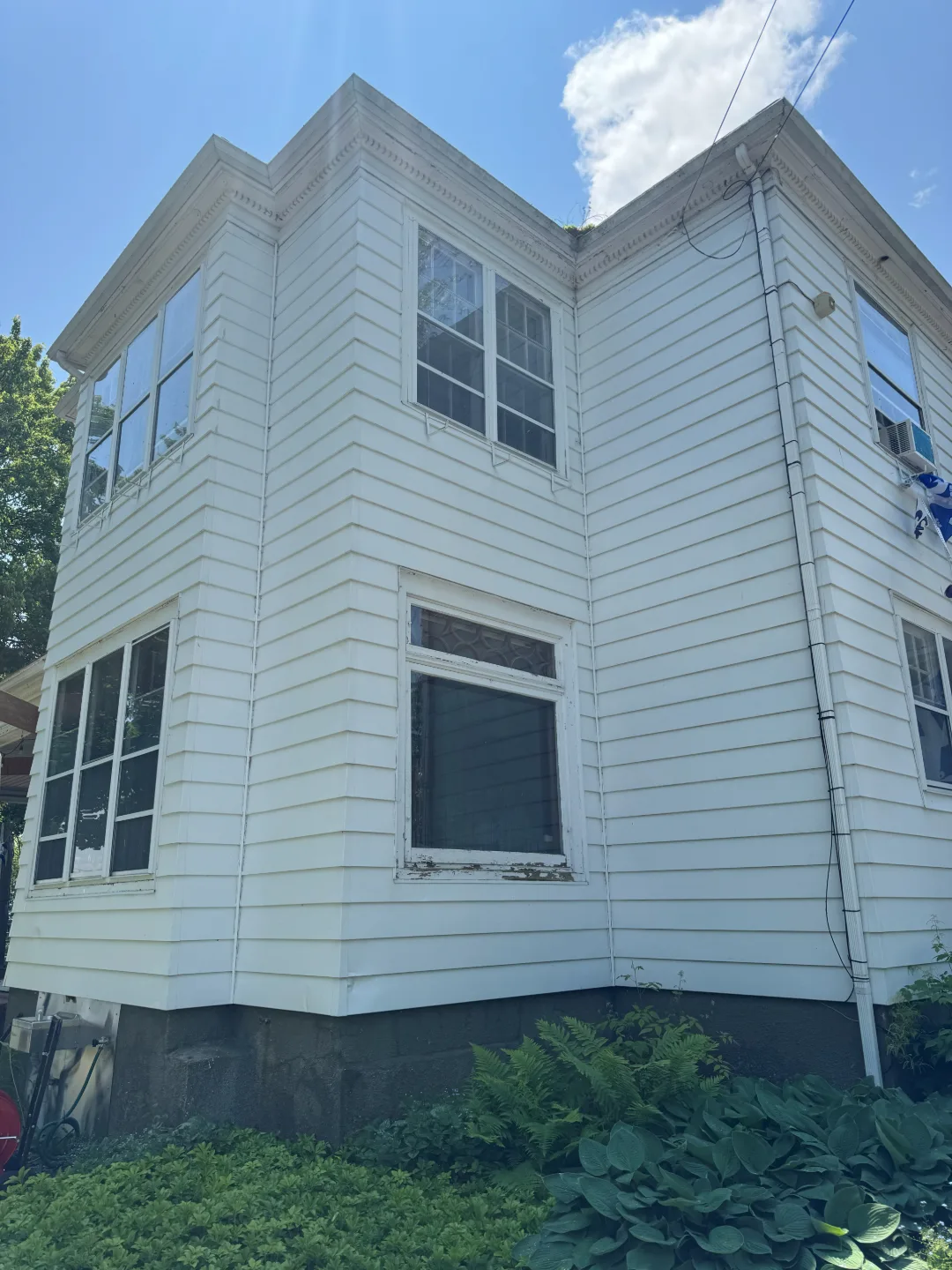 After
AfterHow to remove it safely
Blasting mold with high pressure can damage siding, force water behind it, and spray growth around rather than removing it. For delicate surfaces like siding, paint and roofing, we use soft-washing: a detergent, gentle brushing and a low-pressure rinse. Depending on how heavy the growth is, we may step up to stronger cleaning products, always applied at low pressure. This removes algae, mildew and organic buildup without damaging the surface, and helps prevent it from coming back.
Harder surfaces like concrete walkways and patios can handle pressure washing, using the right pressure for each surface.
Keeping it from coming back
- Trim back shrubs and branches so sun and air reach your siding and walkways
- Keep eavestroughs clear so water doesn’t overflow down your walls
- Book a seasonal cleaning before growth has a chance to take hold
One note: if you suspect mold inside your home, especially over a large area, talk to a mold remediation specialist. Our work focuses on exterior surfaces and windows.